As an Amazon Associate, we earn from qualifying purchases. Some links on this site are affiliate links at no extra cost to you. Our recommendations are based on thorough research and editorial judgment.


Everyday Durability Checklist for Rings, Bracelets, Necklaces

An everyday durability checklist for rings, bracelets, and necklaces includes considering material characteristics, maintenance tips, and storage solutions. Opt for durable materials like titanium, platinum, or stainless steel for strength and hypoallergenic properties. Regularly clean jewelry with mild soap and a soft cloth to maintain its appearance. Store pieces in a compartmentalized box to prevent scratches and use silica gel packets to keep moisture at bay. Implement these practices for longevity, and discover further recommendations for jewelry care.
Key Takeaways
- Choose durable materials like titanium, tungsten, or stainless steel for everyday jewelry to ensure longevity and scratch resistance.
- Regularly clean your jewelry with mild soap and a soft brush to maintain its shine and prevent buildup from oils.
- Conduct monthly safety checks for any bent prongs or loose stones to avoid potential damage or loss of the jewelry.
- Store your jewelry in a compartmentalized box or soft cloth pouches to prevent scratches and tangles between wears.
- Rotate your jewelry pieces to distribute wear evenly and minimize the chances of everyday damage.
Essential Material Characteristics for Everyday Durability
When selecting jewelry for everyday wear, understanding the essential material characteristics is crucial for guaranteeing durability and longevity. Gold options, particularly 14K and 18K, blend beauty with toughness, resisting scratches effectively. For maximum durability, platinum stands out with its hypoallergenic traits, guaranteeing resistance to tarnishing and wear. In contrast, sterling silver offers affordability and style but requires regular maintenance to prevent tarnishing. Stainless steel is another durable choice; its strength against scratches makes it ideal, especially for those with sensitive skin. Additionally, tungsten and titanium present excellent toughness with minimal care. Titanium rings are known for their remarkable strength and resistance to tarnishing and scratching, which makes them an excellent choice for everyday wear. When choosing pieces like engagement rings, considering these materials guarantees lasting appeal while balancing practicality with aesthetic needs for everyday wear.
Maintenance Tips for Everyday Jewelry
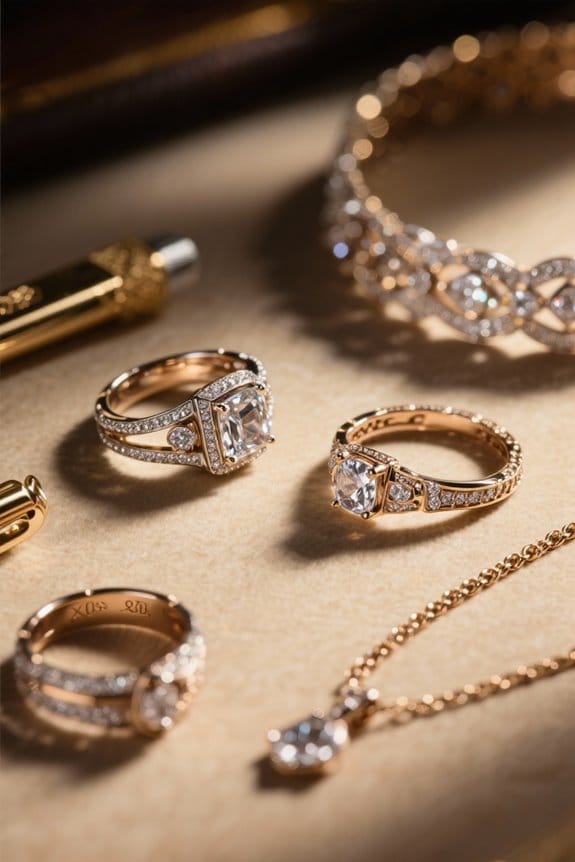
Maintaining jewelry for everyday wear can greatly extend its life and keep it looking beautiful. Regular maintenance includes simple practices like using a soft, lint-free cloth right after wearing to remove oils and sweat, thereby preventing buildup. Conducting quick safety checks before and after wearing helps identify issues like bent prongs or loose stones. Additionally, scheduling regular cleaning at least once a month with mild soap for gold or a soft brush for diamonds is recommended. For daily wear, rotating jewelry options can evenly distribute wear and tear. Proper storage is essential; store your jewelry in individual compartments to avoid scratches. By following these tips, jewelry will remain lustrous and durable, enhancing its longevity. Stainless steel jewelry, especially when made from 316L surgical steel, offers excellent durability and hypoallergenic properties, making it ideal for sensitive skin and everyday use.
Recommended Products

[18K Gold & 316L Steel]: 18K Gold plating over 316L and 304 Steel. Heart pendant (18x15mm) with 1-1.9mm hole. Hand-assembled in New York, USA. [Nordic Studs & Rings]: Includes 3mm Zircon Studs (18K Gold) and 10mm 316L Steel Cartilage Rings. Hypoallergenic and safe for adult use. [Waterproof & Durable]: 100% waterproof and sweat-resistant. Advanced ionic bonding prevents oxidation and irritation. [6-Piece Luxury Set]: Curated necklace and earrings bundle. Ideal for weddings, anniversaries and executive style. No assembly required. [Dual-Tone Bags]: Includes two 9x12cm Organza bags (Pink Coral and White Coral) for gift and storage.

[Vintage Square Aesthetic] Features a sophisticated square case with soft rounded corners to reimagine classic mid-century elegance. This timeless silhouette serves as a graceful jewelry-inspired statement piece for cocktail parties, business meetings, or upscale brunches.
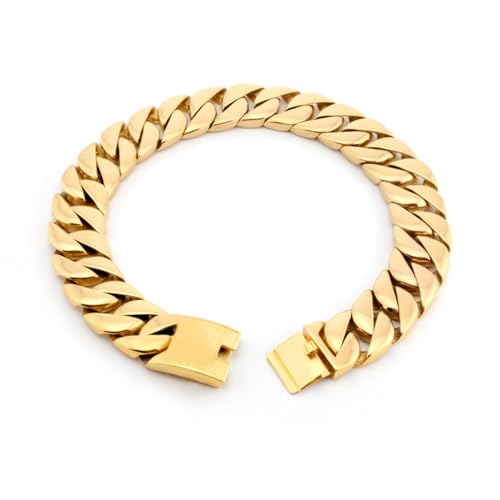
Make a bold statement with this chunky gold necklace, perfect for both men and women who want to stand out in style. 18K Gold Plated Miami Cuban Link , HUGE and HEAVY
Storage Solutions to Preserve Your Pieces

Jewelry storage plays a pivotal role in preserving the beauty and longevity of everyday pieces. It is advisable to store jewelry in a compartmentalized jewelry box, guaranteeing each item is separated to prevent scratches and tangles. Using soft, lint-free cloths or pouches for wrapping jewelry can enhance tarnish resistance while minimizing moisture exposure. For frequently worn pieces, designate a specific area that shields them from damage. Maintaining a cool, dry storage environment is essential; avoid direct sunlight and humidity to prolong the life of your pieces. Additionally, placing silica gel packets in storage areas can effectively absorb moisture, further preventing tarnishing. Hypoallergenic materials are essential for sensitive skin and durability, as they help prevent skin irritations and ensure longevity. Taking these simple steps will facilitate proper care of your jewelry, allowing it to shine for years to come.
Recommended Products
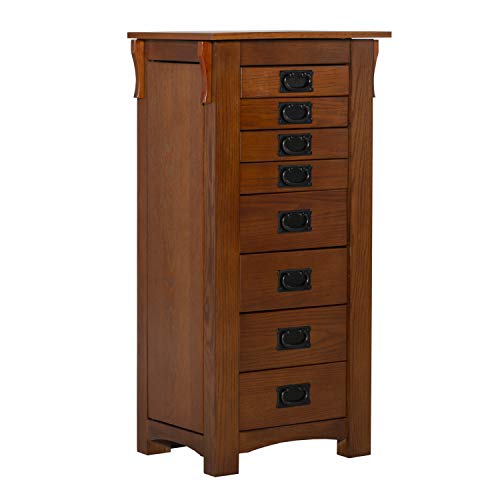
Interior is fully lined with 100% black rayon lining.

✔️ PERFECT FROM BEGINNING TO END - our royal appearance leather jewelry box will bring a touch of luxury to your dressing table. With a smell of Italian elegance, this jewellery box will provide a secure home for your valuable accessories. Make your jewelry organized and protected!

The Xloverise Wooden Jewelry Box is a 16" x 14" x 10" handcrafted solid wood jewelry organizer with approximately 150 compartments, capable of storing around 300 pieces of jewelry, including necklaces, earrings, bracelets, rings, and eyewear.
Frequently Asked Questions
What Is the 2:1:1 Rule for Jewelry?
The 2:1:1 rule dictates a jewelry composition of two pairs of earrings, one necklace, and one bracelet, ensuring style versatility, trend adaptation, and maintenance tips while considering material quality, cost evaluation, and sentimental value for daily wear.
What Type of Jewelry Is Best for Everyday Wear?
Everyday wear blooms best in gold’s warm embrace, mingling with sterling silver’s elegance. Titanium offers durability, while minimalist styles and adjustable bracelets invite layering. Sustainable materials and personalized gemstone settings dance to ever-changing fashion trends, enhancing every moment.
What Is the Durability of Jewelry?
Jewelry durability varies by materials and includes factors like wear resistance, scratch resistance, and gemstone durability. Regular cleaning methods, periodic maintenance, clasp strength, and metal alloys impact longevity, often accompanied by warranty options for reassurance.
What Is the Best Ring Material for Everyday Wear?
For everyday wear, titanium rings offer lightweight hypoallergenic benefits, while stainless steel provides durability and affordability. Gold versus platinum varies in cost and durability, and sterling silver requires care to prevent tarnishing. Layering options abound in ceramics too.


