As an Amazon Associate, we earn from qualifying purchases. Some links on this site are affiliate links at no extra cost to you. Our recommendations are based on thorough research and editorial judgment.

Everyday Jewelry Storage That Reduces Scratches and Knots

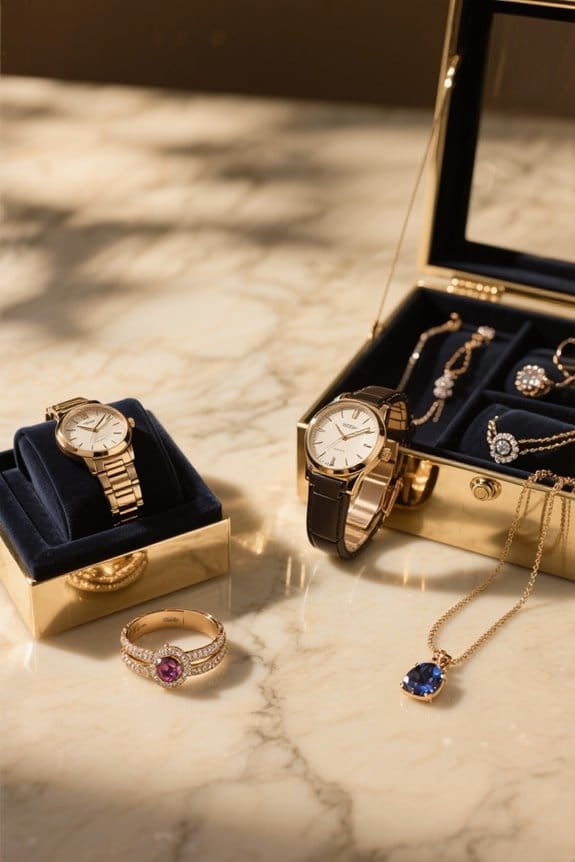
Everyday jewelry storage solutions should prioritize scratch prevention and knot reduction. Look for jewelry boxes with soft, felt-lined compartments; these keep pieces cushioned and prevent friction. Organizers with individual slots for earrings, rings, and chains are particularly effective. Consider stacking trays to maximize space efficiency while using anti-tarnish strips for metal protection. Prices for quality boxes typically range from $20 to $100. These simple strategies can help maintain jewelry’s beauty and longevity, revealing more helpful tips for care.
Key Takeaways
- Store jewelry in soft-lined compartments to prevent scratches and minimize friction between pieces.
- Use individual slots for rings and earrings to keep them organized and protected from tangling.
- Hang delicate chains to prevent knots and tangling while maintaining their shape.
- Employ anti-tarnish storage solutions to reduce environmental exposure and prolong jewelry life.
- Regularly inspect and clean jewelry before storage to avoid tarnishing and maintain appearance.
The Importance of Proper Jewelry Storage
Proper jewelry storage is essential for maintaining the beauty and longevity of cherished pieces. To guarantee safe storage, individuals should consider several jewelry storage tips. Investing in a quality jewelry box with secure closures helps minimize exposure to air and moisture, reducing tarnishing while protecting fine jewelry. A well-organized storage system featuring separate compartments allows users to keep pieces from rubbing against each other, thereby preventing scratches on softer gemstones and metals. Additionally, this organization can combat wear on gold and platinum settings, which can diminish their appearance over time. By implementing these practices, jewelry enthusiasts can promote effective jewelry care and extend the life of their treasured items, ultimately preserving both beauty and value.
Understanding Jewelry Tarnishing and Scratching
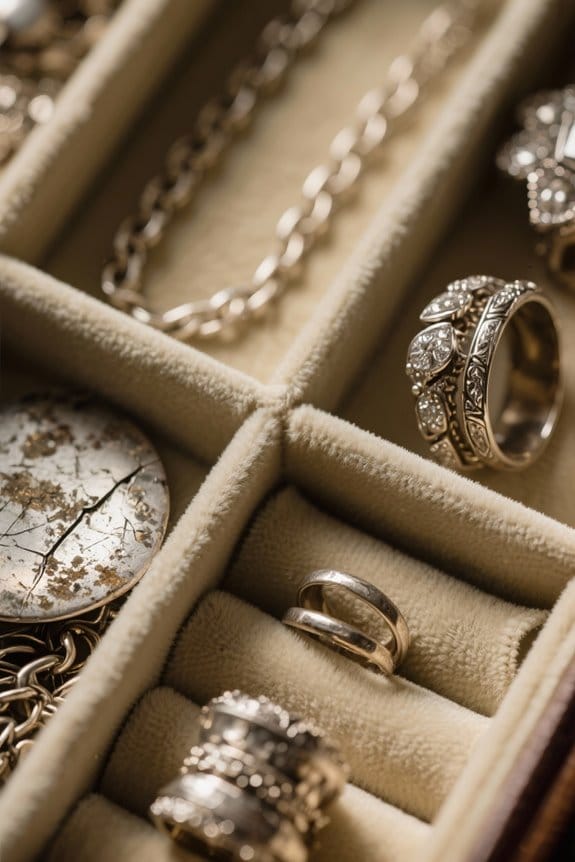
Jewelry, like a cherished memory, can lose its luster over time if not cared for properly. Jewelry tarnishes when metals like silver or copper react with sulfur and oxygen in the air, a process accelerated in humid settings over 55% humidity levels. To reduce scratches, keep pieces in soft-lined compartments rather than stacked together, minimizing friction and movement. Regular inspection and cleaning with a soft cloth help prevent tarnishing by removing dirt and oils. Additionally, limiting exposure to air and avoiding direct contact with perfumes or lotions protects your investment. By staying mindful of these factors, one can maintain jewelry’s integrity, preserving its shine and beauty while extending its lifespan. Opt for hypoallergenic materials to prevent skin irritation, especially for those with sensitive skin.
Choosing the Right Jewelry Storage Solution
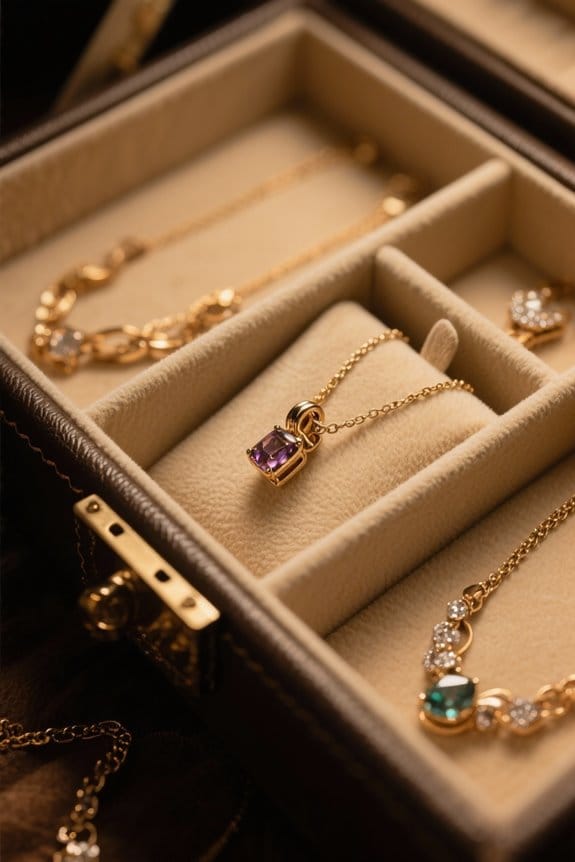
Maintaining the beauty and integrity of jewelry necessitates careful consideration of storage solutions. Selecting jewelry boxes with soft, felt-lined compartments is essential to prevent scratching and rubbing between pieces. Organizers that feature separate compartments for rings, earrings, and necklaces help avoid tangling and damage. It’s wise to choose storage solutions with tarnish-resistant linings to protect sensitive metals from oxidation over time. Additionally, considering stackable trays and hanging organizers maximizes space efficiency, ensuring easy access and reducing overcrowding damage. For individual pieces, using anti-tarnish soft pouches further enhances protection against environmental exposure. By prioritizing these features in storage solutions, one can effectively safeguard their jewelry collection for years to come. Prices for these solutions typically range from $20 to $100, depending on complexity and materials. One should also consider hypoallergenic materials when selecting storage solutions to ensure compatibility with sensitive jewelry pieces.
Best Practices for Storing Specific Jewelry Types
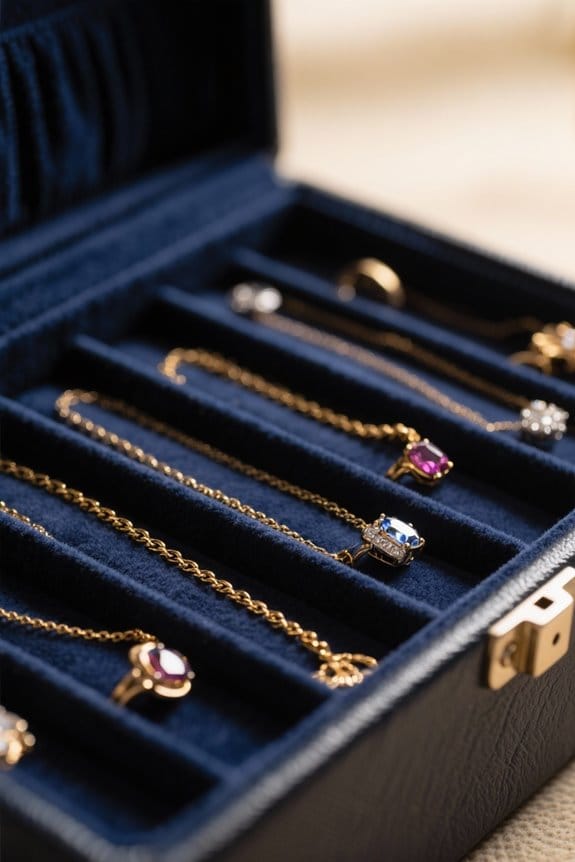
A well-organized jewelry collection hinges on understanding the unique needs of different types of jewelry. To store jewelry effectively, diamond rings should reside in individual slots lined with velvet to minimize scratches and maintain brilliance. For delicate chains, necklace storage can involve hanging or using separate compartments to prevent tangling. Earring holders are ideal for securing pairs together, particularly for small studs, ensuring they don’t get lost. Employ cushioned storage for bracelets to avoid damage and maintain shape over time. Finally, when handling loose diamonds, soft-lined compartments can help prevent movement and friction that may lead to deterioration. By organizing according to these specifications, wearers can achieve ideal protection and tarnishing prevention for their treasured pieces. Additionally, using hypoallergenic properties in jewelry storage can help protect sensitive skin by minimizing contact with potential irritants over extended periods.
Travel Tips for Safe Jewelry Storage
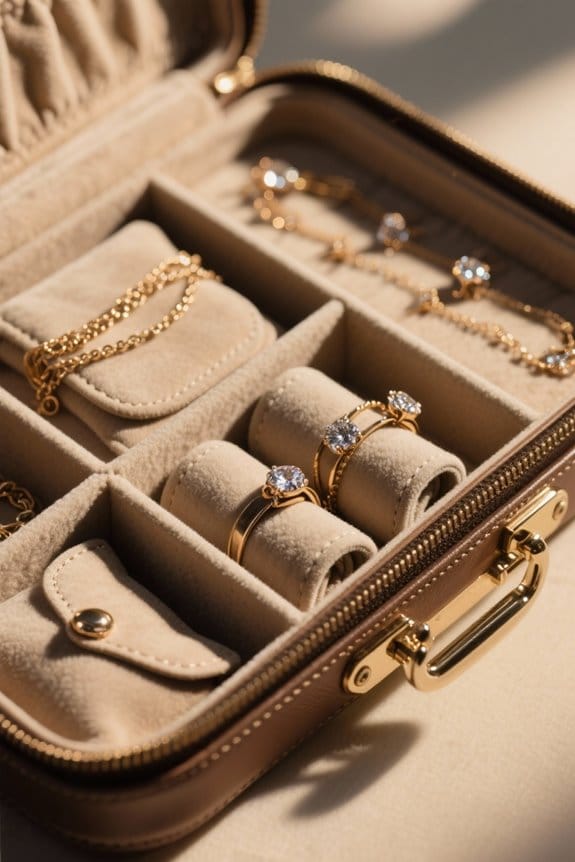
When commencing on a journey, securing jewelry effectively adds a layer of peace of mind. Utilizing hard-shell travel cases with padded compartments can help prevent scratching and damage, guaranteeing delicate pieces, like necklaces, remain safe. Wrapping these items in a soft cloth or using anti-tarnish pouches can prevent tangling and friction. For smaller items, like rings and earrings, a pill case or zippered pouch keeps them organized while on the go and guarantees secure clasps remain intact. When not in use, storing jewelry in hotel safes enhances security. Finally, maintaining a dry, temperature-controlled environment reduces tarnishing risks, particularly for silver and gold. Investing in these simple storage solutions makes traveling with jewelry safer and more enjoyable. To further protect your jewelry, discoloration resistance is important for maintaining aesthetics in stainless steel bracelets.
Long-Term Jewelry Care and Maintenance
Effective long-term jewelry care and maintenance is essential for preserving the beauty and integrity of beloved pieces. Regular inspections for wear and potential damage help guarantee each item is stored properly. To prevent tarnishing, it is advisable to clean jewelry using soft cloths before storage. Anti-tarnish strips and silica gel packets can maintain humidity levels between 45-55%, preventing moisture-related issues. For ideal storage methods, pieces should be placed in soft pouches or cushioned compartments to avoid scratches and tangling when stored together. Additionally, considering annual professional cleanings and inspections can considerably enhance the longevity of a jewelry collection. High-quality materials, like those used in handmade seed bead jewelry, ensure that pieces remain durable and stylish over time. By following these essential steps, jewelry enthusiasts can guarantee their cherished items remain stunning for years to come.
Common Jewelry Storage Mistakes to Avoid
Many jewelry lovers unknowingly commit storage mistakes that can jeopardize their cherished pieces. A primary error is failing to store items in separate compartments, which increases the likelihood of scratching. To protect silver jewelry, it’s crucial to use anti-tarnish strips and avoid unprotected environments, especially humid areas like bathrooms. Stacking necklaces hinders accessibility and can lead to tangling, complicating untangling efforts and causing breakage. Additionally, neglecting regular cleaning and inspections allows unnoticed damage to deteriorate the beauty of your collection over time. Many affordable jewelry sets are tarnish-resistant and can withstand regular wear, further emphasizing the importance of proper storage. To prevent tarnishing and maintain jewelry’s aesthetic appeal, it’s imperative to employ proper storage methods. By keeping pieces organized and regularly checked, jewelry lovers can preserve their favorites for years to come.
Frequently Asked Questions
How to Store Jewelry so It Doesn’t Get Tangled?
To prevent tangling, one might consider jewelry organization tips like necklace storage solutions, earring holder ideas, and DIY jewelry organizers, utilizing acrylic jewelry boxes, drawer insert dividers, or travel jewelry cases for effective organization and accessibility.
What Is the 2:1:1 Rule for Jewelry?
The 2:1:1 rule for jewelry organization advocates storing two types in trays, one hanging, and one in designated boxes. This minimalist approach promotes functional designs, safeguarding against scratching rings while enhancing the aesthetic appeal of luxury displays.
What Is the Best Jewelry Storage?
The best jewelry storage involves a variety of options such as jewelry box types, display stands, and drawer inserts. Utilizing travel organizers, velvet pouches, and wall-mounted racks enhances accessibility and minimizes damage, complemented by regular maintenance tips.
Is It Better to Hang or Lay Jewelry Flat?
Choosing between hanging solutions and flat storage hinges on user preferences and space efficiency. Each method offers distinct jewelry organization benefits, including visibility and accessibility factors, while considering appropriate storage materials and travel methods for protection.


