As an Amazon Associate, we earn from qualifying purchases. Some links on this site are affiliate links at no extra cost to you. Our recommendations are based on thorough research and editorial judgment.

First Everyday Watch Checklist for Beginners

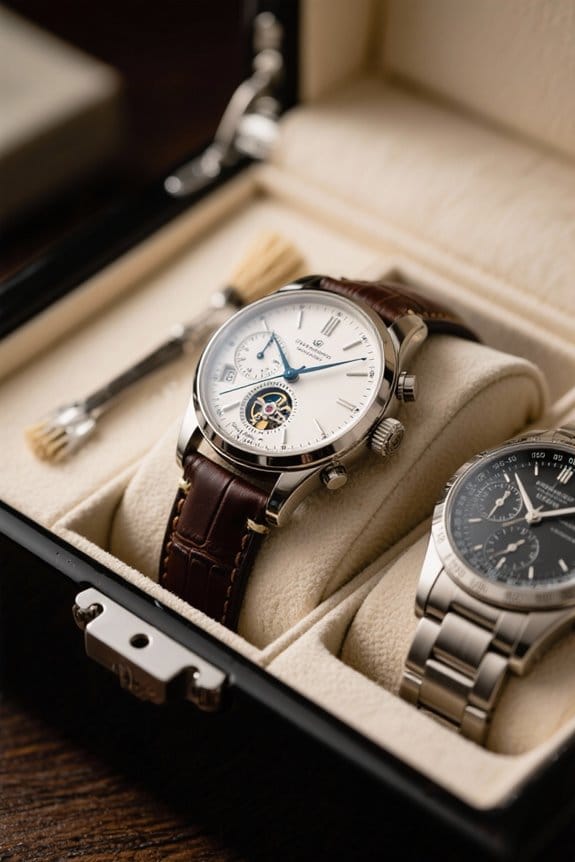
A first everyday watch checklist for beginners should start with understanding movements like automatic, quartz, and manual wind. Next, choose a style: versatile sports or sleek dress watches. Evaluate size with men’s watches typically at 38mm to 44mm and women’s at 28mm to 36mm. Durability matters; stainless steel exudes strength, while sapphire crystal resists scratches. Consider useful features like water resistance of at least 100 meters and date displays. These insights set a strong foundation to discover more.
Key Takeaways
- Choose a versatile style, like a stainless steel or leather strap, suitable for casual and semi-formal outfits.
- Prioritize comfort with a well-fitted case diameter; men’s 38mm-44mm, women’s 28mm-36mm.
- Select a reliable movement; quartz for accuracy and low maintenance, or automatic for craftsmanship.
- Ensure water resistance of at least 100 meters for everyday durability and versatility.
- Look for useful features like a date display and luminous markers for enhanced usability.
Understanding Watch Movements
When exploring the domain of watches, understanding the different types of movements becomes essential for any beginner. There are three primary watch movements: automatic, quartz, and manual wind. Automatic watches wind themselves through wrist motion, requiring regular wear or a watch winder to maintain their accuracy. Quartz watches, powered by batteries, excel in accuracy and low maintenance, making them a favorite among enthusiasts. In contrast, manual wind watches require daily winding and are often cherished for their craftsmanship and artistry. Each movement offers distinct advantages—automatic and manual wind emphasize craftsmanship, while quartz emphasizes convenience and affordability. Understanding these movements helps potential owners make informed choices based on their preferences for accuracy, maintenance, and overall watch ownership experience. Additionally, knowing the water resistance ratings of your watch can ensure that it meets your intended use, especially if considering a dive watch for aquatic activities.
Recommended Products

SPACE-SAVING DESIGN: The elliptical exercise machine boasts compact yet robust dimensions, measuring at 83" L x 34" W x 70" H (400 lb. weight capacity) when assembled. The Sole E98 also features a 20" stride length for an effective home workout.

Refined Craftsmanship – The Junghans Max Bill men’s watch embodies timeless Bauhaus design with a 34 mm stainless steel case, solid caseback, and domed sapphire crystal that highlights the matte silver-plated dial’s elegant simplicity.

Infinite Position: With the built-in triple motor, you can adjust the headrest, backrest, and footrest separately for infinite comfort positions. Ideal for reading, watching TV, napping, sleeping, or standing—perfect for those who struggle to sleep in a bed
Choosing the Right Style

Choosing the right style for an everyday watch is essential, as it sets the tone for both personal expression and functionality. For a first watch, a versatile style that suits both casual and semi-formal outfits is ideal. Dress watches, with their minimalist and slim designs, work well in formal settings, while sport watches provide the durability needed for active lifestyles. A stainless steel or leather strap enhances the classic appeal, making these options favorable for everyday wear. When considering case sizes, men’s watches typically range from 38mm to 44mm, and women’s from 28mm to 36mm. Quartz movements are recommended for accuracy and low maintenance, ensuring reliability in daily wear. Ultimately, the chosen watch should align with personal aesthetics and fulfill practical needs for daily activities, ensuring comfort and style.
Recommended Products

Tudor Heritage Automatic 41 mm Black Dial Men's Watch M79733N-0008

Refined Craftsmanship – The Junghans Max Bill Chronoscope automatic watch for men embodies Bauhaus purity with a 40 mm stainless steel case, domed sapphire crystal, and a clean white dial defined by timeless form and perfect balance.

AUTOMATIC MOVEMENT: Swiss H-10 movement with 80-hour reserve ensures consistent performance. Experience precision that matches both daily tasks and adventures, a testament to Swiss craftsmanship in automatic timekeeping.
Evaluating Size and Fit

A well-fitted watch can enhance both comfort and style, making it a key element in daily wear. For men, watch sizes typically range from 38mm to 44mm in case diameter, while women’s watches are generally between 28mm and 36mm. A snug fit on the wrist is essential, allowing the watch to stay secure without causing discomfort. Case thickness should also be considered, as thicker watches may not sit comfortably under long sleeves. Trying on different styles helps assess both personal taste and comfort. Additionally, the adjustability of the watch band is vital, as it allows for a customized fit. Ultimately, a properly sized watch should balance aesthetics with ease of wear for everyday use. When selecting accessories like gold bracelets, hypoallergenic properties are crucial to ensure skin safety and reduce irritation risk.
Material Durability Considerations

Material selection plays an essential role in determining a watch’s lifespan and suitability for daily wear. Stainless steel is favored for its corrosion resistance and scratch durability, making it an enduring choice for everyday watches. Titanium offers a lighter alternative, known for its strength and hypoallergenic properties, suitable for sensitive skin. The watch face often features sapphire crystal, renowned for its excellent scratch resistance, maintaining clarity over time. Leather straps provide comfort, but they require more maintenance to avoid wear and tear, especially in moisture. In contrast, rubber straps and metal options tend to be more durable. Regular cleaning and proper storage are crucial to enhance the watch’s lifespan, protecting it from dust and environmental factors. Mesh band watches, made from high-quality stainless steel, combine elegance with comfort and are suitable for both formal and casual occasions.
Useful Features and Complications

Many features enhance the functionality and enjoyment of everyday watches, making them both practical and versatile accessories. A date display improves usability by helping the wearer keep track of the days. Quartz movement is often preferred; it offers high accuracy and requires minimal maintenance, making it a convenient choice for everyday wear. For durability against unexpected conditions, watches should have water resistance of at least 100 meters, suitable for incidental exposure during daily activities. The chronograph function provides added versatility for timing events, while a scratch-resistant sapphire crystal guarantees protection against damage. When selecting a watch, consider these essential features to promote both usability and longevity, ultimately leading to a more satisfying ownership experience. Luminous dials or markers can further enhance visibility in low-light conditions, which is a useful feature for outdoor activities.
Recommended Products

TAG Heuer Swiss quartz movement

TAG Heuer Swiss quartz movement

Round watch featuring logoed mother-of-pearl dial with 11 diamond hour markers and magnified date window at 3 o'clock
Setting Your Budget
When starting on the journey of purchasing an everyday watch, budgeting effectively is essential. Setting a budget usually ranges between $1,500 and $5,000, as this price point often features quality timepieces. A thorough financial evaluation will help determine the maximum budget, ensuring that the purchase won’t affect essential living costs. It’s important to factor in additional costs like taxes, shipping, or watch accessories, such as extra straps. Exploring pre-owned options can provide significant savings, giving buyers better value within their budget. Researching various watch brands and models allows newcomers to identify the best quality and features suited for their lifestyle. This careful planning can lead to a successful first everyday watch purchase that suits both taste and finances. Consider exploring mechanical watches as they offer a blend of craftsmanship and functionality, often appreciated by watch enthusiasts.
Recommended Products

⌚Roulette Watch: Case legth 46mm/1.8in, case thickness: 18mm/0.7in, Case width 22mm/in, Artificial green diamond dial. Equipped with NH35A movement for a stable and solid structure.
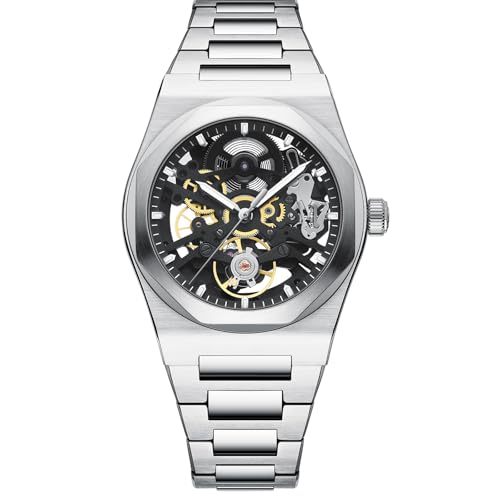
1. Reliable Automatic Mechanical Movement Features high-quality self-winding automatic movement, no battery required. Provides accurate and consistent timekeeping for daily business, work and formal wear.

Automatic Watch Parameter: This formal men's automatic watch boasts a distinctive design, featuring a fully skeletonized dial, exuding a sophisticated and masculine charm. The case diameter is 42MM, case thickness is 11MM, perimeter is 21CM, strap width is 26MM, weight 169g.
Maintenance and Care Tips
Taking care of an everyday watch is vital for guaranteeing its longevity and performance over time. Regular maintenance includes cleaning the watch with a soft, lint-free cloth to remove sweat and oils. For mechanical watches, it’s advisable to service them every 3 to 5 years to guarantee proper functioning. Keeping the watch away from strong magnetic fields and extreme temperatures is essential, as these can affect accuracy. When not in use, one should store the watch in a cool, dry place, ideally in a dedicated watch box or winder. If the watch has water resistance, it’s important to securely push in or screw down the crown before exposure to water, preserving the watch’s integrity. Additionally, quality materials in accessories like bracelets can minimize the risk of breakage or wear, ensuring that they maintain their appearance over time.
Frequently Asked Questions
What Brands Are Recommended for First Everyday Watches?
Recommended brands for first everyday watches include Seiko for reliability, Timex for affordability, Citizen for Eco-Drive technology, Casio for durability, Tissot for style, Hamilton for heritage, Fossil for fashion, Orient for craftsmanship, and Bulova for innovative technology.
How Do I Know if a Watch Suits My Lifestyle?
To determine if a watch suits one’s lifestyle, they should consider fashion styles, daily routines, personal preferences, activity levels, watch features, color choices, occasion suitability, size matters, and comfort factors for ideal selection.
Can I Wear a Watch While Swimming or Showering?
Ironically, not all watches are aquatic adventurers. Only those with adequate water resistance features can brave swimming. Choosing aquatic styles and materials, users must prioritize care, warranty coverage, and meticulous cleaning recommendations post-water escapades to prevent water damage.
What Is the Average Lifespan of a Good Everyday Watch?
The average lifespan of a good everyday watch ranges from 5 to 20 years, influenced by watch movement types, durability from materials, maintenance tips, storage solutions, battery replacement frequency, and availability of watch repair services.
Are There Eco-Friendly Watch Options Available?
Eco-friendly watch options are increasingly available; around 60% of consumers consider sustainability essential. Brands offer solar-powered watches, biodegradable straps, and utilize recycled packaging, while promoting ethical manufacturing, carbon offsets, and watch repair services, alongside second-hand watches.