As an Amazon Associate, we earn from qualifying purchases. Some links on this site are affiliate links at no extra cost to you. Our recommendations are based on thorough research and editorial judgment.


Lume Basics: How Watch Lume Works and Night Legibility Tips

Luminous materials, like Super-LumiNova, absorb light and emit it in darkness, enhancing watch readability. Photoluminescence is key, with brightness varying by material and grade, such as Grade X1. Colors matter too; green provides a vibrant glow, while blue looks stylish but isn’t as bright. To improve night legibility, choose fully-lumed dials and guarantee regular light exposure. Prices for notable models, like those from Nixon, usually range from $150 to $400, reflecting their luminous technology features. Explore further to uncover more insights.
Key Takeaways
- Luminous paint like Super-LumiNova absorbs light and re-emits it, enhancing watch visibility in low light conditions.
- Green luminescence is often preferred for its brightness and longevity, while blue offers an aesthetically pleasing alternative.
- Ensure watches have fully-lumed dials and elements for improved night legibility and functionality.
- Choose watches with Super-LumiNova Grade X1 for superior glow duration and brightness in dark environments.
- Regularly clean the crystal and luminescent surfaces to maximize light absorption and prolong luminescence effectiveness.
Understanding Lume: The Basics
You may be interested


When exploring the world of watches, understanding lume is essential for those who appreciate timepieces that shine in low light. Luminous paint, also known as luminescent material, enhances dial visibility, ensuring readability when it matters most. Popular luminescent options, like Super-LumiNova and LumiBrite, are non-radioactive and require light exposure for activation. The brightness and longevity of the glow can vary greatly, with modern materials lasting several hours after charging. Green and blue hues are frequently favored due to their brightness and clarity. Full lumed dials and highlighted elements such as hands and indices are now common design features, effectively improving legibility in low light conditions. This practical enhancement makes luminous watches both functional and appealing. For those seeking versatility and style, rubber strap dive watches offer a perfect combination of comfort and durability, making them an ideal choice for adventurers and water lovers.
The Science Behind Photoluminescence

Understanding how luminescent materials work enhances appreciation for luminous watches. At the core of this technology is photoluminescence, a process where materials absorb photons and re-emit them as visible light. This principle is essential for the lume found on watch dials. Popular luminescent paint, like Super-LumiNova, relies on strontium aluminate, which needs light exposure to store energy. Once charged, it can glow in the dark, showcasing varying brightness levels. For instance, Super-LumiNova Grade X1 offers superior performance compared to basic grades. Additionally, color variations, especially blue and green hues, enhance visibility at night. By understanding these features, watch enthusiasts can better appreciate the functionality and artistry of luminous watches, as well as make informed choices when purchasing. Blue dial watches, known for their sophistication and versatility, can also incorporate lume technology to enhance both style and functionality.
A Brief History of Luminous Materials

In the evolution of luminous materials, significant advancements have shaped the way watches illuminate the dark. The early 20th century introduced radium-based paint, known for its enchanting self-luminescence. However, the radioactivity posed severe health risks, leading to its ban in 1968. Tritium emerged as a radioactive alternative, but safety concerns led to its prohibition in 1998. Then, in 1993, Super-LumiNova arrived—a non-radioactive luminescent material composed of strontium aluminate. This innovative formula requires light exposure to charge, providing remarkable brightness and a variety of colors. Modern luminescent materials like Super-LumiNova prioritize user safety while enhancing watch design. 100m Water-Resistant Watches are often equipped with these safe luminescent materials to ensure visibility even in aquatic settings. Ultimately, these developments showcase a remarkable journey from hazardous materials to safe luminosity options for consumers.
The Radium Era in Watchmaking

The Radium Era in watchmaking marked a significant turning point in the industry, as manufacturers harnessed the luminescent properties of radium-based paint to revolutionize the way timepieces could be read in low-light conditions. Radium’s long half-life of about 1,600 years made it an appealing choice, especially for military watches during World War I. However, the health risks posed to workers were substantial, leading to radium poisoning and greater awareness of radioactive materials. Over time, manufacturers began shifting from radium to safer alternatives. For instance, radium with zinc sulfide presented a less hazardous option. Eventually, the Japanese company Nemoto developed non-radioactive luminescent materials that proved to be safer than radium, marking the end of this controversial era in watchmaking. As with hypoallergenic properties in jewelry, the shift to safer luminescent materials in watches emphasized the industry’s commitment to consumer safety and health.
Transition to the Tritium Era

As watchmakers sought safer alternatives to radium, the introduction of tritium marked a significant evolution in luminous technology during the mid-20th century. Tritium, a radioactive isotope, emits low-level beta particles, providing luminescent effects with far less risk than radium, which had serious health implications for workers. Watch manufacturers began using tritium, with dials often marked by a “T” to indicate its presence. However, tritium’s brightness diminishes over time, with a half-life of about 12 years, leading to reduced visibility in older watches. Despite its advantages, concerns over safety prompted the banning of tritium in watches in 1998, which subsequently opened the door for non-radioactive alternatives, such as Super-LumiNova, that are now prevalent in the market. A C3 grade of Super-LumiNova offers superior brightness and longevity, making it a preferred choice for enhancing visibility in low-light conditions.
Modern Advances in Luminous Technologies
Modern luminous technologies represent a remarkable leap forward in watch illumination, effectively combining safety and performance. Notable innovations include Super-LumiNova, introduced in 1993, which utilizes strontium aluminate to produce a bright glow after exposure to light. Timex’s Indiglo features a phosphor-based panel, ensuring consistent illumination exclusive to the brand. Seiko’s LumiBrite, developed in 1995, incorporates europium and dysprosium additives for enhanced light absorption and longevity. Rolex’s Chromalight, launched in 2008, boasts a proprietary blend that emits a bright blue glow, maintaining brightness for up to eight hours. These modern luminous technologies prioritize safety through non-radioactive materials, achieving impressive brightness and durability. Collectively, they enrich night legibility, offering numerous advantages for watch enthusiasts and casual wearers alike. When selecting a watch, considering water resistance ratings is crucial for ensuring usability in various conditions.
Recommended Products

INSTANT READ MILITARY TIME: Never struggle to convert time during a busy shift. Features a high-contrast dial with bold Arabic numerals and a dedicated 12/24-hour inner ring. Perfect for medical professionals, fire academy cadets, and military personnel who require split-second accuracy.

✅ Complete mod kit with 29mm raised scale dial and lightning bolt hands, perfectly compatible with 8215, 8200, 8205, 821A, 2813, 3804 mechanical movements for diver watch DIY upgrade.

Bold blue dial with luminous hands and large Arabic numerals provides clear visibility in any light
How Lume Is Applied in Watches
Lume application techniques in watches showcase a fascinating blend of art and science, ensuring best visibility in low light conditions. Typically, lume is applied using a careful painting technique that employs special phosphorescent inks or paints cured under UV light. This method focuses on key elements such as indices, hands, and bezels, which are critical for visibility. Various luminescent materials, including Super-LumiNova and LumiBrite, are mixed to achieve specific brightness levels and colors. High-end brands may apply multiple layers to enhance luminescence, adjusting thickness for ideal glow duration. The quality of the lume applied directly influences the watch’s performance, as higher-grade materials tend to maintain brightness and longevity better than standard options, ensuring reliable visibility when needed.
Types of Luminous Materials Used Today
With a focus on visibility in low-light conditions, various luminous materials have emerged, each with unique properties and applications in watchmaking. Super-LumiNova, introduced in 1993, is a non-radioactive material made from strontium aluminate, requiring light exposure to glow. Conversely, Tritium was phased out in 1998 due to safety concerns, but modern GTLS technology reintroduces it in select high-end models. LumiBrite, developed by Seiko in 1995, enhances brightness and duration using europium and dysprosium. Chromalight, launched by Rolex in 2008, emits a bright blue glow for up to eight hours post-light exposure. These luminous materials are strategically applied to essential dial elements, offering multiple color options like green, blue, and yellow, with varied brightness levels for enhanced night legibility. Stackable rings, like those offered in various sets, provide versatility and style, similar to how luminous materials offer diverse color options for personalization.
Recommended Products

🎁JUMBO PACK - 10 color long-lasting generous packs(7oz total) of glow in dark pigments can bring gorgeous glow to your art projects. Each slime pigment comes in an individual shake jar, which make it easier to use and control with no waste or mess.


Glow-in-the-Dark Magic: Watch your white tiger come alive with a mesmerizing glow under low light! Every detail, from the sharp eyes to the bold stripes, radiates a soft, enchanting luminescence, transforming your room into a captivating, serene focal point for evening ambiance
Benefits of Different Lume Colors
When it comes to choosing the right luminous color for a watch, various options provide distinct benefits tailored to different preferences and conditions. Green luminous colors are highly efficient, producing bright glows visible for extended periods. Blue luminescence, while aesthetically pleasing for high-end models, has slightly reduced brightness, making it less effective in darkness. White luminescent materials, like BGW9, shift from a daytime white to a soft blue glow at night, achieving up to 95% effectiveness compared to standard green. Innovative options like C3 glow bright green at night but appear yellow during the day, enhancing versatility. Meanwhile, X1 Grade pigments considerably boost brightness by 60% after two hours, ensuring excellent night legibility in low-light situations, catering to varied watch enthusiasts. Open band rings offer unique styles and versatility that can complement luminous watches, making them great additions for both casual and formal settings.
Recommended Products

✅ PRODUCT DETAILS: Glow in the Dark UV Black Light Pigment Powder. This is a Daytime INVISIBLE glow in the dark super fine crystal pigment, that charges under uv rays from the Sun or Black light, as well as most other forms of incandescent lighting. This means that they are WHITE or NEUTRAL colored during the day and Glow a respective color in the Dark.
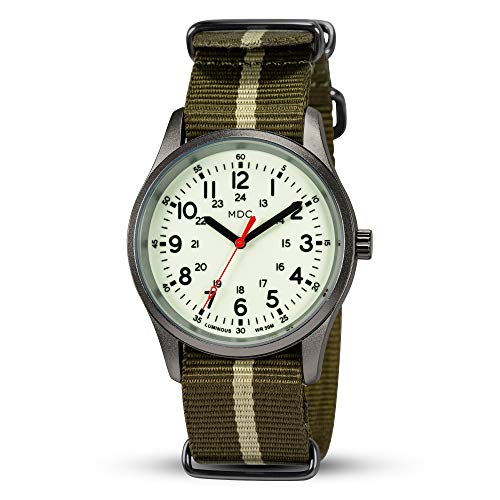
INSTANT READ MILITARY TIME: Never struggle to convert time during a busy shift. Features a high-contrast dial with bold Arabic numerals and a dedicated 12/24-hour inner ring. Perfect for medical professionals, fire academy cadets, and military personnel who require split-second accuracy.
How to Maximize Night Legibility
To enhance night legibility in watches, users should consider several key strategies that involve both the watch’s features and proper usage. First, ensuring the watch is exposed to light to charge for a sufficient period is essential, as luminescent materials like Super-LumiNova need this to shine brightly. Opting for watches with fully-lumed dials and hands maximizes visibility, making it easier to read the time in low light. Selecting luminescent colors like green or blue can provide brighter and longer-lasting illumination at night. Additionally, watches with Super-LumiNova Grade X1 offer superior brightness and extended glow duration. Finally, regularly cleaning the crystal and lume surfaces allows for ideal light absorption, improving overall night legibility—making it easier for users to see their timepieces in darkness. Water resistance ratings are crucial to consider, as they indicate how well a watch can withstand exposure to moisture, which can affect the lume’s performance over time.
Recommended Products

Movement:Quality Japanese 28-Jewels Automatic movement (Calibre 9015) , 28.800 beat rate and 42 hours of energy storage.Functions without a battery; Powers automatically with the movement of your arms.

Built for Extreme Depths: Engineered with 1000M water resistance and a helium escape valve for serious diving environments

Operating modes: air, nitrox, gauge and freedom modes
Notable Lume Watches to Consider
Several remarkable watches stand out not only for their timekeeping capabilities but also for their impressive luminescent features, making them excellent choices for those seeking visibility in low-light environments. The Nixon Stinger 44 boasts a bold oversized design with luminous capabilities, providing outstanding visibility. The Nixon 51-30 Chrono combines chronograph functions with glow-in-the-dark properties, enhancing night legibility for any occasion. Meanwhile, the Nixon Mullet offers a stylish approach with its unique luminous functionality, suitable for both casual and formal settings. Nixon’s collection emphasizes quality lume, ensuring reliable darkness visibility while maintaining aesthetic appeal. For those interested in performance and fashion, these luminescent watches are valuable options, with pricing typically ranging from $150 to $400, depending on specific models and features. Additionally, rotating bezel watches are known for their durable materials, which offer resistance to corrosion and wear, making them a popular choice among diving enthusiasts.
Recommended Products

Black stainless steel case 48mm diameter x 12.5mm thick; Black dial; Luminous hands and hour markers

[Luxury and Classy Design] 👍 Featuring the gold chronograph dial, 41mm gold-tone case, an ever-practical date display window at 3 o’clock and luminous hands, the watch showcases men's masculinity and glamour. The refined watch graces the men's everyday and dress wear.

⌚Mens OLEVS Watches: Imported Japanese movement, high quality battery, analog display roman watch, accurate time, It can meet various needs in your daily life and bring you convenience.
The Future of Luminous Technologies in Watchmaking
As watchmakers venture further into the domain of luminous technologies, innovations are increasingly prioritizing the development of non-radioactive materials, such as Super-LumiNova. This focus guarantees user safety while maintaining brightness in low-light conditions. Brands aim to enhance luminescent performance by employing innovative materials and refined application techniques, elevating both aesthetics and functionality. The integration of luminous designs in bezels and dials supports better visibility during outdoor activities. Emerging luminescent pigments promise improved longevity and color versatility, maintaining intensity over prolonged periods. Given the rising consumer demand for fully-lumed dials, companies are likely to invest in research for efficient luminous options, paving the way for a brighter future in watchmaking. Expect ongoing advancements that marry safety with functionality.
Frequently Asked Questions
How Does Lume on Watches Work?
Lume on watches thrives through advanced lume technologies, utilizing various lume materials to absorb and emit light. Its applications span dials, hands, and indices, ensuring visibility in darkness enhances functionality while adding aesthetic charm.
Why Does the Lume on My Watch Not Work?
The lume on the watch may not work due to insufficient charging, degradation over time, or damage to the watch face. Addressing common lume issues and properly fixing watch lume can restore illumination effectiveness.
How to Improve Lume in Watch?
To improve lume in a watch, utilize effective lume charging techniques, select the best lume materials like Super-LumiNova or Chromalight, and guarantee thorough coverage on dials and hands to enhance visibility during low-light conditions.
What Is the Lifespan of a Watch Lume?
The lifespan of watch lume varies considerably; for instance, Tritium lasts approximately 12.3 years. Effective lume maintenance and charging mechanisms enhance luminous materials, ensuring watches retain visibility longer, influenced by exposure and application quality.