As an Amazon Associate, we earn from qualifying purchases. Some links on this site are affiliate links at no extra cost to you. Our recommendations are based on thorough research and editorial judgment.


Fixing Common Clasps: Lobster, Spring Ring, Magnetic Tips

Fixing common clasps like lobster, spring ring, and magnetic types involves specific techniques. For lobster clasps, inspect the spring mechanism for dislodged parts and use pliers for realignment. Spring ring clasps require careful twisting with pliers to close gaps securely. Magnetic clasps simply need magnet strength checks and proper alignment. Regular inspections are essential to maintain their functionality. Upgrading to durable clasps can enhance longevity and ease of use. Further methods for each clasp type await those enthusiastic to learn more.
Key Takeaways
- Inspect lobster clasps regularly using a magnifying glass for dislodged springs and ensure smooth operation after repairs.
- Twist open and close broken jump rings carefully with flat-nose pliers to maintain integrity and avoid gaps.
- For spring ring clasps, check the coiled spring; replace if it fails to retract fully.
- Ensure magnetic clasps connect securely by testing the strength of the magnets before use.
- Store jewelry in a cool, dry place to prevent clasp corrosion and ensure longevity.
Gather Your Tools and Materials

To commence the journey of fixing common clasps, one must first gather the right tools and materials. Essential tools include flat-nose pliers for gripping components and needle-nose pliers for maneuvering in tight spaces, especially when handling a lobster clasp or components of a spring mechanism. A magnifying glass enhances visibility, crucial for inspecting small parts. Creating a jewelry repair kit with necessary supplies, like jump rings and precision tweezers, will facilitate delicate adjustments. Additionally, organizing the workspace with a small tray helps prevent losing tiny pieces, while a soft cloth protects the jewelry from scratches. By prioritizing specific tools for clasp types, the repair process becomes more efficient and successful, ultimately saving both time and resources. When selecting jewelry for repair, it is important to consider hypoallergenic materials that ensure safety for those with sensitive skin.
Recommended Products


Suitable for hobby, crafts, electronics, jewelry making, home, DIY, and office use

Non-Sparking Beryllium Bronze Copper Flat Screwdriver 13mm Flat Head, Length 450mm
Identify the Type of Clasp

Identifying the type of clasp is essential for effective repairs, as each type has unique characteristics and mechanisms. Lobster clasps, for instance, have a claw-like shape and feature a spring mechanism activated by a lever, providing secure closure. Spring ring clasps are circular, employing a coiled spring for easy opening and closing, making them popular in lightweight jewelry. Magnetic clasps, on the other hand, use strong magnets to connect and disconnect, offering convenience for those with dexterity challenges. Other options like toggle clasps and barrel clasps also exist, with unique functionalities. Each clasp type provides distinct advantages and disadvantages, making knowledge of these mechanisms vital for ensuring a successful repair process in various necklace clasps. Many 14K gold plated bracelets feature hypoallergenic properties, which cater to those with sensitive skin and enhance wearing comfort.
Recommended Products


SOLID 14K White Round Magnetic Clasp - not filled or plated

MATERIAL - This necklace is made with 100% real 14 karat gold. It is not gold plated, not gold filled, not gold over sterling silver. This necklace is stamped 14k.
Repairing a Lobster Clasp

Repairing a lobster clasp can be a straightforward process, provided one understands its components and functioning. First, the spring mechanism inside should be examined with a magnifying glass to check for dislodged parts or tension loss. If the spring has come loose, precision tweezers can help reposition it correctly within the clasp’s housing. Next, align the gate of the lobster claw with the base using needle-nose pliers, ensuring smooth operation of the trigger. After repairs, test the trigger to confirm it opens and closes without obstructions. If the clasp still malfunctions due to compromised parts, consider replacing it entirely with a new lobster clasp. This guarantees best security and convenience for your jewelry pieces, especially necklaces. Additionally, lobster clasps are known for their superior security compared to other types like spring ring clasps, making them a preferred choice for valuable jewelry.
Recommended Products

Beautifully crafted and well designed in Italy: Nickel Free construction ensures quality and safety for sensitive skin

This Necklace is built with our durable Savlano strength Lobster Clasp for a strong secure lock and easy use. Necklaces come in 16-36 Inches.

Length: 2.433 inches | Swivel Inner Width: 1.008 inches | Swivel Outer Width: 1.337 inch | Hook Inner Width: 0.545 inch | Hook Opening Width: 0.331 inch | Thickness 5.21mm
Fixing a Broken Jump Ring
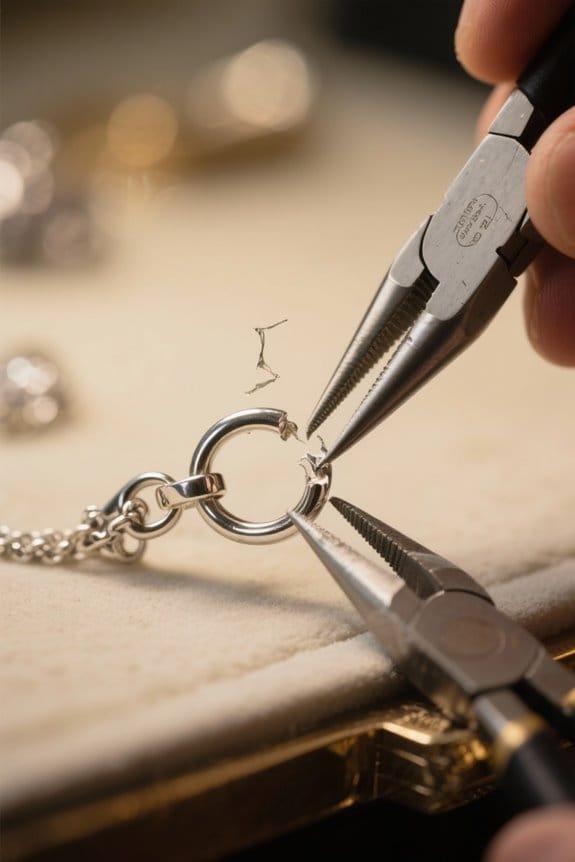
Fixing a broken jump ring can enhance the overall quality and lifespan of jewelry pieces. First, determine if the jump ring is open or closed. If it’s open, flat-nose pliers can be used to twist it gently, ensuring proper alignment with the chain. Misalignment may cause slippage or breakage. When closing the jump ring, twist it inward instead of pulling it apart to prevent gaps that weaken the connection. If the jump ring is too damaged, a split ring offers added security as a sturdier alternative. Regularly inspect jump rings on necklaces for wear, like deformation or excessive gaps, to maintain the integrity of the piece of jewelry. Proper care will prolong the life and use of the clasp types involved. Stainless steel necklaces, for example, are known for their durability and scratch resistance, making them a popular choice for long-term wear.
Recommended Products

Includes both internal and external snap ring pliers for snap rings inside a bore or around a shaft

Pink Exclusive Color

Reattaching the Clasp to the Necklace

Reattaching a clasp to a necklace can restore functionality and guarantee the jewelry remains secure during wear. To begin, gather necessary tools such as flat-nose pliers and a jump ring from any jewelry supply. Open the jump ring by twisting it gently, ensuring it retains its shape for threading. Next, carefully insert the jump ring through the loop of the new clasp and the end of the necklace or bracelet, ensuring everything aligns correctly. Once positioned, tightly close the jump ring to prevent slippage. After reattachment, test the clasp’s ease of use by opening and closing it multiple times. This sturdy clasp will enhance the longevity of your jewelry, making it a worthwhile fix that can often cost little. Additionally, consider if the jewelry includes natural stones like Lava Rock, as proper care and maintenance can enhance both its aesthetic and functional longevity.
Recommended Products
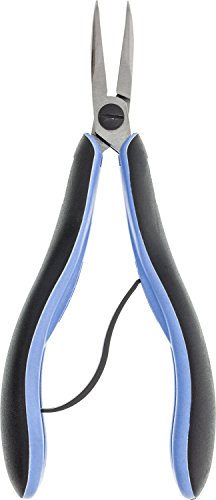

Strong blades for heavier wire bending operations.
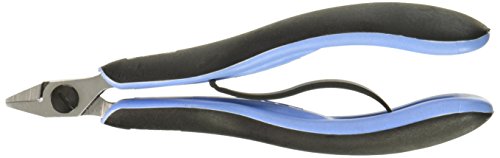
Strong blades for heavier wire bending operations.
Preventing Future Clasp Breakages
To guarantee necklaces and bracelets remain in good condition over time, adopting preventative measures against clasp breakages is essential. Regularly inspecting clasps for wear and tear can pinpoint potential issues before they lead to a ring failure. To make sure that the clasp is sturdy, one must also avoid exposing jewelry to moisture. Removing items before swimming or showering is a smart practice. Storing jewelry in a dry, cool environment will further prevent oxidation. Gentle handling techniques during fastening and unfastening can markedly reduce stress, especially for delicate designs. Upgrading to durable types like lobster or Safety Clasp offers reliability for high-use pieces. These popular choices increase longevity and are worth considering as part of routine DIY jewelry maintenance. Additionally, choosing stainless steel for your watch bands ensures rust resistance and enhances durability, which is crucial for lasting wear.
Frequently Asked Questions
How to Repair a Spring Ring Clasp?
To repair a spring ring clasp, utilize clasp repair tools to examine components, adjust the spring with precision tweezers, perform spring ring troubleshooting, and consider clasp replacement options if necessary for improved durability and function.
How to Remagnetize a Magnetic Clasp?
With over 30% of jewelry mishaps linked to weak clasps, remagnetizing involves using a neodymium magnet for magnetic field restoration. Jewelry maintenance tips include troubleshooting clasp issues and considering magnet replacement for clasp strength improvement while observing safety precautions.
Can You Fix a Lobster Clasp?
Yes, a lobster clasp can be fixed using various techniques. Important materials include precision tweezers and needle-nose pliers, while common issues stem from spring dislodgement. Professional help may be required for extensive damage or replacement. Prevention is vital.
What Is the Difference Between a Spring Ring and a Lobster Clasp?
The spring ring offers advantages like affordability and lightweight suitability, while the lobster clasp provides durability and ease of use. Users may prefer lobster clasps for their design variety and security, despite size and economic considerations.


