As an Amazon Associate, we earn from qualifying purchases. Some links on this site are affiliate links at no extra cost to you. Our recommendations are based on thorough research and editorial judgment.


Seasonal Watch Care: Heat, Humidity, Sweat, Leather Preservation

Seasonal watch care is essential, especially in heat and humidity. Excessive heat can thin lubricants and cause malfunctions, while humidity accelerates leather strap degradation. To preserve leather, use breathable alternatives like rubber straps and maintain a loose fit to reduce sweat contact. Protect your watch from water damage by understanding water resistance, ideally rated at 10 ATM for swimming. Regularly clean and condition leather straps to prevent odors and cracks. Following these tips guarantees watch longevity, offering further insights on maintenance and care.
Key Takeaways
- Protect leather straps from excessive heat and humidity to prevent deterioration and unwanted odors.
- Clean your watch regularly with a soft cloth to remove sweat and debris, enhancing longevity.
- Use breathable strap alternatives like rubber or NATO straps during hot weather to minimize sweat absorption.
- Apply leather conditioner monthly to maintain flexibility and prevent cracking in warm and humid conditions.
- Schedule regular servicing every 3 to 5 years to monitor moisture resistance and overall watch performance.
Understanding the Impact of Heat on Your Watch
How does excessive heat affect the delicate mechanisms of a watch? High temperatures can thin lubricants in mechanical movements, leading to malfunctions and reduced accuracy. Moreover, components like the case and dial can expand, compromising the watch’s integrity. Watches exposed to direct sunlight or extreme heat—such as those left on car dashboards—risk fading dials and damaging leather straps. In addition, heat and humidity often coexist, increasing the likelihood of moisture entering non-water-resistant watches, resulting in rust and internal damage. To combat these issues, it is vital for watch owners to regularly check the water resistance and assess gaskets and seals in hot climates. Black stainless steel rings, known for being hypoallergenic materials, can be more suitable for those with sensitive skin during hot seasons. By taking these precautions, one can better preserve their timepiece’s functionality and appearance.
The Importance of Humidity Control

Maintaining ideal humidity control is essential for preserving the integrity and longevity of watches, especially those with leather components. High humidity can accelerate the degradation of leather watch straps, leading to premature deterioration. When exposed to humid environments, leather absorbs moisture, resulting in unwanted odor and potential damage over time. To protect these delicate straps, avoiding exposure to water activities like swimming or showering is advisable. Proper storage in a cool, dry place, along with the use of protective pouches, can help shield leather from humidity-related issues. Additionally, regularly conditioning leather with appropriate moisturizers will help maintain its quality and mitigate any adverse effects from humidity, ensuring leather watch straps remain in prime condition for years to come. Furthermore, the hypoallergenic nature of 925 sterling silver makes it a suitable choice for watch components, providing peace of mind for individuals with sensitive skin or metal allergies.
Managing Sweat and Its Effects on Leather Straps

The impact of sweat on leather watch straps is a significant consideration for watch enthusiasts. During summer months, the porous nature of leather can make it prone to moisture absorption from sweat, leading to potential odors and deterioration. Prolonged exposure can cause irreversible damage, including cracking and discoloration. Cleaning leather straps with a soft cloth helps, but it’s often insufficient for preventing moisture-related issues. To better manage sweat, consider using breathable alternatives like rubber or NATO straps in hotter conditions. Additionally, maintaining a looser fit for leather straps promotes airflow and reduces sweat accumulation. By following these recommendations, watch lovers can protect their leather straps and extend their lifespan while enjoying their timepieces throughout the summer. Square dial watches are particularly stylish and functional, making them a great option for those seeking to combine fashion with practicality.
Protecting Your Watch From Water Damage

When considering the best ways to protect a watch from water damage, understanding water resistance ratings is essential. Not all watches offer the same protection; a minimum water resistance rating of 10 ATM (100 meters) is ideal for swimming or diving. Regular maintenance checks of seals and gaskets are important to maintain the watch’s water resistance. Prolonged exposure to saltwater or chlorinated water can also harm leather straps, causing degradation and discoloration. After swimming in oceans or pools, it’s necessary to rinse the watch with fresh water to eliminate salt and chlorine residues. By knowing these simple guidelines, watch owners can better protect their investment from water damage, ensuring longevity and performance. Additionally, rubber strap dive watches are perfect for daily wear due to their versatility, style, and water resistance, making them a reliable choice for water enthusiasts.
Strategies for Proper Leather Strap Care
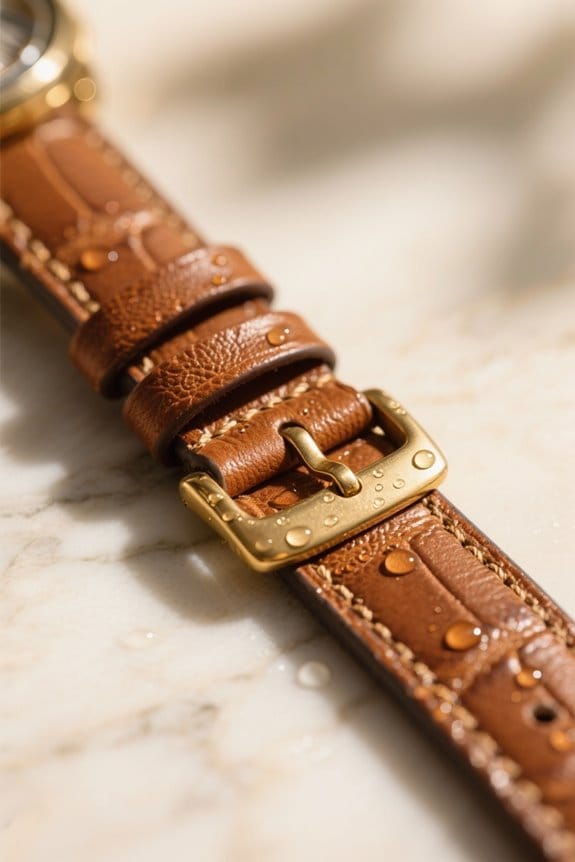
Caring for leather watch straps requires attention to detail and some simple strategies that can greatly extend their life. Regular application of leather conditioner, at least once a month, can prevent drying and cracking, helping to preserve integrity. Storing straps in cool, dry places away from direct sunlight and humid environments will also prolong their lifespan. To reduce wear, it’s beneficial to rotate leather straps, allowing each to breathe and recover. During hot weather, maintaining a looser strap fit promotes airflow, minimizing sweat absorption and bacterial growth. Additionally, wiping down straps regularly with a soft cloth removes moisture and residues, enhancing their appearance and longevity. With these strategies, watch enthusiasts can keep their leather straps looking brand new. To ensure elegant designs such as slim and classic styles cater to different tastes, selecting the right strap style is crucial.
The Benefits of Regular Strap Rotation
Maintaining a watch collection involves not just caring for the timepieces, but also giving attention to their straps. Regular strap rotation is vital for leather straps, as it allows them to breathe, reducing sweat and skin oils that can lead to deterioration or unpleasant odors. Each strap needs recovery time after wear, essential for maintaining its shape and overall lifespan by avoiding consistent stress. Furthermore, changing straps minimizes exposure to moisture and heat, essential in humid conditions. By rotating multiple straps, collectors can enjoy varying styles while protecting individual ones from premature wear. Implementing a strap rotation schedule also promotes regular conditioning and cleaning, greatly enhancing strap longevity. Overall, embrace strap rotation as a key element in watch maintenance. Additionally, hypoallergenic properties in materials such as those in 14K gold plated bracelets can be beneficial in preventing skin irritation when wearing watch straps.
Best Practices for Storing Your Watch
Proper storage of a watch collection is essential for preserving both the functionality and aesthetics of timepieces. To follow best practices for storing your watch, choose a cool, dry environment, as this helps protect leather straps from humidity and degradation. Avoid direct heat and sunlight, which can cause leather to wear prematurely. Utilizing watch boxes or leather pouches creates a protective barrier against dust and environmental factors. Additionally, regularly check the condition of your stored watches, confirming that seals and gaskets are intact to prevent moisture ingress. For those who travel frequently, padded watch rolls offer an excellent solution, providing protection while allowing for easy access. Genuine leather is generally more durable than synthetic options, but requires regular conditioning to prevent cracking. By adhering to these guidelines, watch enthusiasts can guarantee longevity and elegance in their collections.
Maintaining Your Watch’s Water Resistance
After confirming that a watch collection is stored properly, attention should turn to another vital aspect of watch care: water resistance. It is important to regularly check a watch’s water resistance rating, aiming for at least 10 ATM, or 100 meters, for swimming or diving activities. Prolonged exposure to saltwater or chlorinated water can compromise critical water resistance components, so rinsing with fresh water after use is advised. Further, professional maintenance and gasket checks should be performed annually, particularly in hot or humid climates. Even watches made from stainless steel or ceramic need routine inspections since seals degrade over time, increasing the risk of moisture ingress, which can cause internal damage like rust or mold. Regular care guarantees longevity. 100m water-resistant watches are ideal for activities such as swimming and snorkeling but not suitable for scuba diving.
Essential Cleaning Tips for Summer
How can watch enthusiasts keep their timepieces looking pristine during the warm summer months? To begin with, it is essential to regularly wipe down leather straps with a soft, dry cloth after exposure to sweat or moisture. This habit removes residues and prevents deterioration. Using a gentle leather cleaner designed for watches is recommended before applying a leather conditioner to keep the straps moisturized regularly. Avoid harsh chemicals, as they may damage the leather’s color and texture. For stubborn stains, gently massage a small amount of conditioner onto the affected area. Finally, verify leather straps are completely dry before storage to prevent mold from humidity. By following these simple yet effective cleaning tips, watch enthusiasts can maintain their timepieces throughout the summer months. Additionally, consider switching to FKM rubber straps during the summer for enhanced durability, comfort, and breathability.
Scheduling Regular Watch Servicing
Keeping watches in top condition during the summer not only involves regular cleaning but also scheduling watch servicing. Regular watch servicing is essential to maintain the integrity of seals and gaskets, especially in hot and humid conditions. Experts recommend scheduling a professional service every 3 to 5 years, depending on the watch’s age and how frequently it’s worn. During servicing, watchmakers assess waterproofing components to prevent moisture ingress, a vital step to safeguard the movement. Additionally, regular check-ups can help identify small issues before they escalate, ultimately extending the life and functionality of the watch. Keeping a log of service dates can further assist in managing these maintenance schedules effectively, ensuring timely evaluations and peak performance.
Frequently Asked Questions
Does Sweat Ruin a Leather Watch?
Sweat damage affects leather watches like water eroding stone. Neglecting leather maintenance in humid conditions shortens watch longevity, as moisture can lead to odor, deterioration, and bacterial growth, highlighting the importance of attentive care and rotation.
How to Remove the Sweat Smell From Leather Watch Brand?
To remove sweat smell from a leather watch, regular leather watch maintenance is essential. Employ cleaning techniques like soft cloth wiping, using leather conditioner, and deodorizing sprays for effective sweat odor prevention and lasting freshness.
How to Take Care of Watch Leather?
Leather conditioning tips include regular application of cream, storing in a cool place, and gentle cleaning after moisture exposure. Watch maintenance techniques emphasize avoiding humidity effects while allowing straps to breathe, ensuring longevity and performance.
How to Keep Leather Watch Bands From Cracking?
To prevent leather watch bands from cracking, she nurtured them with nourishing conditioners, shielded them from moisture, and cradled them in cool, dark corners, allowing their beauty to bloom through time and careful storage.


