As an Amazon Associate, we earn from qualifying purchases. Some links on this site are affiliate links at no extra cost to you. Our recommendations are based on thorough research and editorial judgment.


Watch Finishing Basics: Brushed, Polished, Sandblasted, Mixed

Watch finishing techniques, including polished, brushed, sandblasted, and mixed, play vital roles in design and performance. Polished finishes offer a high-gloss look, ideal for luxury brands but are prone to scratches. Brushed finishes, which can feature various patterns, provide durability, concealing wear effectively. Sandblasted finishes create a unique matte appearance, appealing to niche markets. Each method has specific production challenges and maintenance requirements. Exploring these options can guide choices for a stylish and functional timepiece.
Key Takeaways
- Polished finishes offer a luxurious, reflective surface but are more prone to scratches and require regular maintenance to retain their appearance.
- Brushed finishes provide a rugged, durable look that effectively conceals wear and tear, ideal for tool and dive watches.
- Sandblasted finishes create a unique matte look suited for industrial designs, minimizing reflections but requiring precise control to ensure surface integrity.
- Mixed finishes combine polished and brushed elements, appealing to a broader audience by balancing aesthetics and durability.
- Maintenance varies across finishes; polished surfaces need frequent cleaning, while brushed surfaces may trap dirt but are generally easier to care for.
The Importance of Surface Finishing in Watch Design
In the world of watch design, surface finishing holds a pivotal role, as it not only shapes the look of a timepiece but also enhances its overall performance. Techniques like polished finishes provide a luxurious, mirror-like effect, appealing to collectors and those seeking elegance. However, this shine comes with a downside—the susceptibility to scratches compared to brushed finishing. Brushed finishes offer a more subdued texture that cleverly conceals wear and tear while increasing durability. Additionally, sandblasted options create a unique matte appearance, targeting niche markets like military or aviation watches. Ultimately, the choice of surface finishing impacts production costs and brand value, making it essential for designers to align finishing techniques with the watch’s intended market and purpose. 200M water-resistant watches stand out for their robust construction and suitability for aquatic activities, which can complement various finishing techniques to enhance durability and functionality.
Overview of Polished Finishing

Polished finishing represents a hallmark of luxury in watch design, admired for its ability to capture and reflect light with dazzling brilliance. Characterized by a high-gloss, polished surface, this technique creates a mirror shine that elevates the aesthetics of premium timepieces. Common polishing techniques, such as mirror polishing and Zaratsu polishing, require skilled artisans who meticulously work to eliminate imperfections, achieving flawless results. However, while polished finishes convey sophistication and value, they are more susceptible to visible scratches, necessitating ongoing careful maintenance to retain their pristine appearance. Luxury watches like the Rolex Datejust and Omega De Ville exemplify the appeal of polished finishes, influencing consumer perceptions and playing an essential role in the competitive horology market’s branding and pricing strategies. Watches with Japanese quartz movement are known for their reliability and precision, which ensures accurate timekeeping across all models.
Techniques and Methods of Polishing

Mastering the art of polishing involves various techniques that contribute substantially to a watch’s visual allure. Among the most recognized methods are mirror polishing and Zaratsu polishing, each needing specialized skill to achieve a polished, reflective finish. The polishing process typically employs a wheel or cloth combined with compounds, creating a smooth, glass-like surface that enhances aesthetic appeal. Luxury brands like Rolex and Omega often utilize such polished finishes, embodying sophistication. While polishing delivers a striking shine, it also makes watches more prone to visible scratches and dings, emphasizing the importance of regular maintenance. Artisans dedicate extensive time to guarantee quality and consistency during polishing, where even the smallest imperfections can impact the watch’s overall perception of craftsmanship. Many Eco-Drive watches feature durable constructions, ensuring the longevity of the polished finish alongside their advanced technology.
Challenges in Polished Finish Manufacturing

Creating a polished finish on luxury watches presents a unique set of challenges that manufacturers must navigate. Achieving these polished finishes requires skilled artisans using time-consuming techniques such as mirror polishing and the Zaratsu method. As polished surfaces exhibit high reflectivity, they are prone to scratches, making quality assurance critical throughout production. Even the slightest imperfection can diminish the timepiece’s overall appeal, impacting brand perception and consumer willingness to pay a premium. The multi-stage polishing process necessitates specialized machinery and expert calibration to guarantee consistency. Considering these challenges, manufacturers must balance production costs with the expected quality level, ultimately aiming to create timepieces that uphold the luxury image inherent to polished finishes. Additionally, maintaining the water resistance of such timepieces, especially those with a 100-meter water resistance rating, requires regular inspection and maintenance to ensure that seals and gaskets remain intact.
Wear and Maintenance of Polished Surfaces

While polished surfaces are admired for their luxurious appearance, they also require careful attention to maintain their allure over time. These surfaces, characterized by their mirror-like finish, are more susceptible to scratches and dings. Regular maintenance is vital; using microfiber cloths for gentle cleaning can help preserve their shine. It’s important to avoid frequent over-polishing, as it can diminish sharp edges and intricate details, potentially affecting resale value. Special polishing compounds can restore luster, but overuse can lead to unintended damage. For ideal care, polished watches should be stored away from abrasive materials in soft cases. Genuine leather is generally more durable than synthetic options, but requires regular conditioning to prevent cracking. By following these maintenance guidelines, owners can guarantee that their polished surfaces remain striking and visually appealing for years.
Aesthetic Appeal and Brand Perception of Polished Finishes
Polished finishes epitomize luxury and sophistication in the world of timepieces, enchanting enthusiasts and collectors alike. These finishes create a mirror-like surface that dramatically enhances light reflection, signaling high craftsmanship. Prominent watch brands, such as Rolex and Omega, leverage polished finishes not only for their aesthetic appeal but also to communicate exclusivity and premium quality. Achieved through complex techniques like mirror and Zaratsu polishing, these finishes require skilled artisans to maintain consistency. However, while visually stunning, polished surfaces tend to be more susceptible to scratches, posing a challenge for durability-minded consumers. Ultimately, the marketing value of polished finishes enhances brand perception, making them a coveted choice for collectors and connoisseurs who appreciate elegance in design. Rectangular face watches, known for their unique aesthetic, often feature polished finishes that further emphasize their vintage charm and classic themes.
Overview of Brushed Finishing
Brushed finishing offers a distinct aesthetic and functional appeal that distinguishes many modern timepieces. This technique generates a textured grain on the watch surface, effectively reducing shine while emphasizing ruggedness and technical sophistication. Common types of brushed finishes include linear, radial, and sunray patterns, each contributing to a unique look. The precision of brush strokes greatly influences the quality of the finish, showcasing exceptional craftsmanship. Particularly favored in tool and dive watches, brushed finishes enhance durability, as they resist scratches better than polished surfaces. Combining these brushed surfaces with polished elements can enrich the overall design, appealing to various consumer tastes and enhancing the watch’s visual complexity. Square dial watches with brushed finishes offer a perfect blend of vintage aesthetics and modern durability, making them a practical and stylish choice. For those considering a new timepiece, brushed finishes remain a practical and stylish choice.
Types and Patterns of Brushed Finishes
Understanding the various types and patterns of brushed finishes is essential for anyone interested in the craftsmanship of watches. These finishing techniques produce textured surfaces through methods like linear, radial, or sunray brushing. Each technique relies on stroke direction, while the spacing and heaviness are determined by the grit of the abrasive tools used. Common patterns include vertical, horizontal, circular, and sunburst, each offering a distinct aesthetic to a steel watch. Brushed finishes are particularly favored in tool and diving watches, as they effectively conceal lighter scratches. The versatility of these finishes allows for creative combinations with polished or sandblasted elements, enriching the visual appeal of a single timepiece, making it both functional and stylish. Hypoallergenic properties are a crucial factor to consider when selecting jewelry, including watch finishes, to ensure comfort and skin safety for sensitive users.
Advantages and Limitations of Brushed Finishes
A distinctive texture characterizes brushed finishes, lending them a rugged charm that appeals to both enthusiasts and casual wearers of timepieces. The brushed watch case effectively reduces shine, making it ideal for tool and dive watches designed for durability. Various grades of grit are used, allowing for customization in the brushing effect, resulting in a satin finish that cleverly hides lighter scratches. This enhances wearability and contributes to long-term aesthetic appeal. However, while brushed surfaces are more scratch-resistant than polished ones, their texture can sometimes trap dirt. Mixed finishes, combining brushed and polished styles, can offer a balanced aesthetic, catering to diverse preferences. Overall, the choice of brushed watch finishing brings both advantages and distinct limitations for potential buyers to weigh. Many Casio budget watches, like the Casio F91W Digital Watch, feature durable materials which ensure longevity while remaining lightweight for comfort.
Recommended Products

Brushed titanium case (45 mm x 54 mm, 14 mm thick), Screw-in case-back, Black guilloche dial, Black hands


Model 220.12.40.20.06.001
Overview of Sandblasted Finishing
Sandblasted finishing stands out as a popular choice among watchmakers looking to create a unique and robust aesthetic. This technique involves blasting stainless steel with fine particles, producing a matte surface that minimizes light reflection. The resulting texture caters well to the ruggedness desired in aviation and military watch designs, helping to hide wear and tear over time. Different polishing techniques can complement this finish, yet sandblasting offers its own distinct look. Precise control during the sandblasting process is vital to avoid issues like surface porosity. While high-quality OEM suppliers utilize advanced equipment for peak results, additional sealing treatments may be necessary to enhance durability. A sandblasted finish is often paired with rubber strap dive watches to provide a durable and stylish option for adventurers and water lovers. Overall, sandblasted watches appeal to those seeking industrial elegance in their timepieces.
Manufacturing Challenges and Market Appeal of Sandblasted Finishes
The manufacturing of watches with sandblasted finishes presents a unique set of challenges that watchmakers must navigate. Achieving a consistent sandblasted texture requires meticulous precision, as uneven finishes can compromise surface integrity and create issues like porosity. This is particularly critical for military watches, where durability and rugged aesthetics are paramount. High-quality OEM suppliers utilize advanced sandblasting equipment, but the process often demands additional sealing measures that extend production timelines. While sandblasted surfaces effectively conceal wear, refinishing them poses difficulties compared to polished or brushed finishes. Despite these challenges, the distinctive industrial look of sandblasted watches attracts niche markets, appealing to those who appreciate modern, resilient timepieces. Ultimately, watchmakers must balance aesthetics with functionality to satisfy their consumers.
Mixed Finishing Techniques and Their Applications
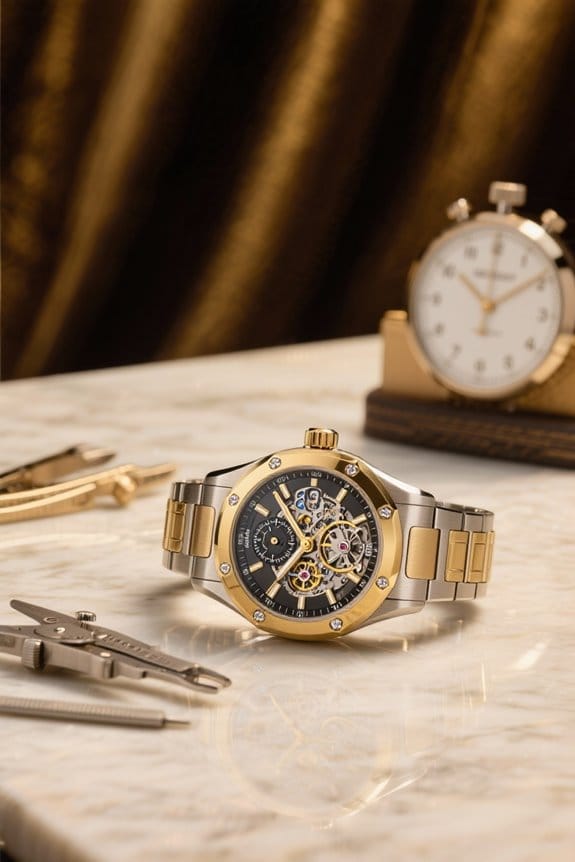
Mixed finishing techniques have emerged as an enchanting trend in the watchmaking industry, where aesthetics and functionality blend harmoniously. This technique combines brushed and polished elements on a single watch case, creating a dynamic aesthetic that attracts a wider audience. For instance, polished edges contrast beautifully with brushed surfaces, enhancing both luxury and ruggedness. Employing different tools to achieve these finishes allows brands to showcase craftsmanship and attention to detail, helping them stand out in a competitive market. The versatility of mixed finishes caters to diverse consumer preferences, addressing functionality and durability while retaining a distinctive style. Popular among luxury and tool watches, mixed finishes enrich the design narrative, embodying a fine balance of artistry and practicality.
Frequently Asked Questions
What Is the Difference Between Brushed and Polished Watches?
Brushed watches feature a textured finish that enhances durability and conceals scratches, while polished watches boast a reflective shine, offering a luxurious appearance. The durability comparison favors brushed finishes for everyday wear and practicality.
What Are the Different Watch Finishes?
Watches feature diverse finishes, with over 60% of luxury models utilizing satin finishes. Other techniques include bead blasting for matte textures and DLC coating for enhanced durability, each affecting the timepiece’s appeal and functionality markedly.
What Does Watch Buffing Mean?
Watch buffing involves employing watch polishing techniques and buffing tools to refine a watch’s surface. This process enhances aesthetics through meticulous surface preparation, ensuring a smooth, reflective finish while cautioning against potential damage from over-polishing.
What Is the Anglage Finishing About?
Anglage finishing involves applying anglage techniques to create beveled edges on watch components. Utilizing specialized anglage tools, this technique enhances aesthetic appeal while providing durability by eliminating sharp edges, ultimately showcasing craftsmanship and attention to detail.