As an Amazon Associate, we earn from qualifying purchases. Some links on this site are affiliate links at no extra cost to you. Our recommendations are based on thorough research and editorial judgment.


Watch Movements at a Glance: Japanese Vs Swiss Vs Chinese

Watch movements differ markedly among Swiss, Japanese, and Chinese manufacturers. Swiss movements, like the ETA 2824-2, excel in precision, with deviations of -4 to +6 seconds daily, showcasing intricate craftsmanship. Japanese options, such as Seiko’s 4R36, offer reliability, a 41-hour power reserve, and a slightly broader accuracy range of -10 to +30 seconds. Chinese movements, represented by Seagull, are more affordable, ranging from $30 to $200, and compete well with standardized options. Exploring these choices further reveals the unique qualities each brings to the table.
Key Takeaways
- Swiss movements are celebrated for precision, craftsmanship, and elaborate finishing, setting the industry standard with renowned models like ETA 2824-2.
- Japanese movements offer reliable performance and innovation, with popular options like Seiko’s 4R36 and Miyota’s 9015, balancing quality and affordability.
- Chinese automatic movements have improved significantly, providing reliable and cost-effective options like Seagull ST1701, appealing to new market entrants.
- Pricing varies widely: Swiss movements cost hundreds to thousands, Japanese fall between $100 to $500, while Chinese movements range from $30 to $200.
- Each movement type showcases unique characteristics, with Swiss focusing on craftsmanship, Japanese on technology, and Chinese on solid engineering and design evolution.
Overview of Automatic Watch Movements
Automatic watch movements represent a fascinating blend of artistry and engineering that has evolved over centuries. Utilizing a self-winding mechanism powered by wrist movement, these automatic movements convert kinetic energy into stored energy through a rotor. This craftsmanship symbolizes traditional horology, highlighting the importance of precision engineering within the watchmaking industry. Automatic movements often include features such as hacking seconds and hand-winding, enhancing user functionality. Quality and reliability can vary considerably among Swiss movements, Japanese movements, and their Chinese counterparts. Despite the rise of quartz and smart technologies, automatic watches maintain their allure, reflecting an appreciation for intricate timekeeping and artistry. With a broad range of options available, enthusiasts are encouraged to explore various brands, focusing on durability and style. Additionally, enthusiasts might consider the versatility of rope chain necklaces when selecting complementary accessories to highlight the elegance of their timepieces.
Swiss Automatic Movements

Swiss automatic movements are the gold standard in the world of horology, prized for their precision and craftsmanship. The ETA 2824-2 movement is widely recognized for its reliability, found in various luxury and mid-range watches. This movement not only boasts exceptional accuracy, often verified by COSC certification, which permits a daily deviation of -4 to +6 seconds, but also highlights the intricate finishing techniques that define Swiss craftsmanship. Featuring decorative elements like Côtes de Genève and perlage, these movements showcase a blend of aesthetic beauty and technical precision. The prestige associated with Swiss automatic movements springs from centuries of refined engineering and hand-finishing practices. Many watch enthusiasts appreciate the superior craftsmanship found in dress watches, which also contributes to a luxury feel in budget-friendly options. Ultimately, they remain the hallmark of quality for watch enthusiasts and collectors alike.
Recommended Products

Brushed and polished stainless steel case (42 mm in diameter, 13 mm thick), Screw-down case-back engraved with the Revue Thommen logo, Black unidirectional rotating rose gold bezel with 60 minute scale displaying Arabic numerals and indices

Brushed and polished stainless steel case (42 mm in diameter, 13 mm thick), Screw-down case-back engraved with the Revue Thommen logo, Blue unidirectional rotating rose gold bezel with 60 minute scale displaying Arabic numerals and indices

Polished stainless steel case (42 mm in diameter, 13 mm thick), Screw-down case-back engraved with the Revue Thommen logo, Black unidirectional rotating bezel with silver 60 minute scale
Japanese Automatic Movements

Celebrated for their reliability and innovative features, Japanese automatic movements have carved out a significant niche in the watchmaking industry. Notable brands like Seiko and Miyota exemplify this excellence. For instance, Seiko’s 4R36 movement boasts a remarkable power reserve of approximately 41 hours, merging affordability with high-end capabilities, including hand-winding and hacking. Meanwhile, the Miyota 9015 is famed for its slim profile and durability, widely used across various watch styles from dress to sports. Compared to Swiss alternatives, Japanese movements offer a broader range of price points while typically maintaining an accuracy of around -10 to +30 seconds per day. Japanese automatic movements, such as the NH35A mechanical movement, are favored in affordable dive watches for their robust construction and water resistance capabilities of up to 200 meters. Overall, these movements represent a balanced blend of functionality, efficiency, and value, making them appealing to both amateurs and enthusiasts.
Recommended Products

Gray Gradient Dial With Silver Hands And Hour Indexes

Automatic needle position correction function

Chinese Automatic Movements

Although often overshadowed by their Swiss and Japanese counterparts, Chinese automatic movements have made significant strides in both accuracy and reliability in recent years. Brands like Seagull and Hangzhou Watch Company have developed movements known for features such as hacking seconds and hand-winding, enhancing user experience. The Seagull ST1701, for example, has gained respect for its quality, competing directly with standard-grade ETA movements. While Chinese movements are commonly viewed as less precise than Swiss options, some indeed offer comparable accuracy, making them a wise choice for watch enthusiasts. Additionally, their cost-effective nature allows new watch brands to enter the market without sacrificing essential quality. With competitive pricing and reliable performance, Chinese automatic movements represent a growing segment of the horological landscape. Automatic movements promote convenience by winding themselves through kinetic energy from the wearer’s wrist, eliminating the need for manual winding in daily use.
Recommended Products

Movement model: ST2162/816.32.1215

San Martin 39mm SN0144 Chinese Style Sunburst Dial Men Dress Watch 90S5 Automatic Diving Watch (V 1)
PREMIUM MOVEMENT: Features a 90S5 automatic movement, delivering reliable timekeeping performance in an elegant dress watch design

⭐ YOUR ENTIRE COLLECTION INSIDE: 12 watch slots allow you to keep your watch collection in a compact case. The watch winder needs as little as 10"x16" on your desk or dresser.
Comparing Accuracy and Precision

When comparing accuracy and precision among automatic watch movements, several key factors emerge that distinguish their performance across different standards. Swiss automatic movements stand out with chronometer-level precision, achieving an accuracy of -4 to +6 seconds per day, often certified by COSC. In contrast, Japanese movements, such as the Miyota 9015, generally range from -10 to +30 seconds per day, showcasing their reliability but with some variability. Chinese movements, like the Seagull ST2130, have improved their accuracy considerably, now competing with standard-grade Swiss models, though they still lag behind in high-precision standards. Overall, while Swiss movements often outperform their Japanese counterparts, reliable Chinese options offer affordability for those seeking decent accuracy without breaking the bank. Additionally, hypoallergenic materials, often used in luxury accessories, are also considered in watchmaking to enhance comfort and suitability for sensitive skin.
Durability and Reliability of Movements
Durability and reliability are critical factors to contemplate when evaluating automatic watch movements, as they directly impact a watch’s lifespan and maintenance needs. Swiss movements are renowned for exceptional durability and longevity due to their meticulous craftsmanship and high-quality materials, often regarded as heirloom pieces. In contrast, Japanese movements, particularly from Seiko and Miyota, provide reliable performance with minimal maintenance, functioning effectively for decades. Meanwhile, Chinese movements have shown marked improvements, with brands like Seagull creating robust options that enhance reliability and durability. While Swiss movements typically achieve chronometer-level precision, Japanese options offer accuracy within -10/+30 seconds per day. Overall, gauging durability and reliability enables informed choices across Swiss, Japanese, and Chinese watch movements for diverse preferences and budgets. 100m Water-Resistant Watches are particularly popular among active individuals and outdoor enthusiasts due to their versatility and reliability in various conditions.
Cost Considerations in Watch Movements
Cost plays a significant role in the decision-making process when selecting watch movements. Swiss movements are often the most expensive, typically priced from several hundred to several thousand dollars, reflecting their luxury status and craftsmanship. Japanese movements, such as those from Seiko and Miyota, offer a happy medium, generally ranging from $100 to $500, ensuring quality without straining budgets. In contrast, Chinese movements are the most affordable, retailing between $30 and $200, making them ideal for entry-level automatic watches. Despite being less costly, Chinese movements have improved in reliability, allowing new brands to enter the market. Ultimately, choosing a movement depends on balancing price with desired quality, ensuring consumers find the right fit for their watch needs. Leather strap watches offer timeless style and durability, making them a popular choice for those seeking both elegance and reliability.
Recommended Products

Stainless steel round case
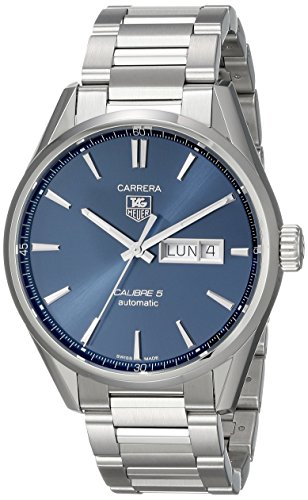
Polished stainless steel case (41 mm in diameter, 13 mm thick), sapphire crystal screw-down case-back; blue brushed dial with applied tag heuer logo, silver-tone luminescent hands, silver-tone indices, sweep seconds hand
![SEIKO SBEJ011 [PROSPEX Diver Scuba 1968 Mechanical Divers Modern Design GMT Men's Metal Band] Watch Japan Import June 2023 Model](https://m.media-amazon.com/images/I/41NQ5CX6YrL._SL500_.jpg)
Craftsmanship and Aesthetics
The artistry in watch movements varies considerably between the Swiss, Japanese, and Chinese manufacturers, each bringing its unique flair to craftsmanship and aesthetics. Swiss watch movements are celebrated for their elaborate hand-finishing, featuring techniques like Côtes de Genève and perlage that enhance both beauty and luxury. In contrast, Japanese watchmakers excel in technological innovation, producing timepieces that prioritize reliability and functional design, often showcasing minimalist aesthetics. Chinese movements have made great strides in craftsmanship, drawing inspiration from Western traditions while offering affordable options for consumers. Each style reflects a distinct perspective: Swiss craftsmanship embodies timeless artistry, Japanese designs embrace precision, and Chinese options highlight an evolving appreciation for aesthetics. Collectively, these variations enrich the world of horology. Many curb chain bracelets are also water-resistant, typically made from strong materials like stainless steel.
Popular Movements From Switzerland
Swiss watch movements are renowned worldwide for their precision and craftsmanship, setting a high standard in the horology industry. Among the popular movements from Switzerland, the ETA 2824-2 stands out for its reliability, often featured in both luxury and mid-range watches. This movement is celebrated for its COSC certification, ensuring accuracy within -4/+6 seconds daily. Swiss watchmakers pay attention to exceptional craftsmanship with intricate finishing techniques like Côtes de Genève and perlage, showcasing both function and beauty. The Valjoux 7750 is another notable movement, known for its versatility in chronograph functions. With prestigious brands like Rolex and Omega utilizing Swiss movements, the legacy of precision and quality in Swiss watchmaking remains unmatched, promising enthusiasts a blend of tradition and innovation. Stainless Steel Figaro Chains offer timeless appeal and design versatility for those who appreciate both modern and classic styles, much like the enduring allure of Swiss watch movements.
Iconic Movements From Japan
In the world of horology, Japanese watch movements, especially those from Seiko and Miyota, have carved out a significant reputation for reliability and innovation. Japanese automatic movements are often known for their advanced features. For instance, the Seiko 4R36 offers a versatile 41-hour power reserve, manual winding, and hacking capabilities for accurate time-setting. On the other hand, Miyota’s 9015 movement stands out with its slim design and impressive daily accuracy of -10 to +30 seconds. Additionally, Grand Seiko’s 9S85 movement epitomizes craftsmanship, delivering exceptional accuracy of -3 to +5 seconds per day at 36,000 beats per hour. These movements increasingly rival Swiss counterparts, providing affordable options without sacrificing quality, appealing to various watch manufacturers and enthusiasts alike. A noteworthy aspect of Japanese craftsmanship can also be seen in the creation of mesmerizing moonstone rings, showcasing intricate designs and quality materials that captivate jewelry enthusiasts.
Emerging Movements From China
Chinese watch movements have made remarkable strides in quality and performance, capturing the attention of watch enthusiasts and manufacturers alike. Brands like Seagull and Hangzhou have produced notable Chinese calibers such as the ST1701 and ST2130. These movements are known for their robust engineering and features like hacking seconds, impressive power reserves, and reliable quality and accuracy. Historically viewed as less prestigious, emerging movements from China are now increasingly capable of competing with standard Swiss movements, especially in entry-level and mid-range mechanical watches. The affordability of these movements allows new brands to thrive, making quality timepieces accessible to a broader audience. With continued advancements, Chinese movements are carving a respected niche in the watch industry.
Choosing the Right Movement for Your Watch
When choosing the right movement for a watch, enthusiasts often find themselves weighing factors like performance, price, and intended use. Swiss movements, such as the ETA 2824-2, offer exceptional accuracy at -4/+6 seconds per day, making them ideal for luxury timepieces where precision is key. Japanese movements, like the Miyota 9015, provide reliability and a wider price point, achieving -10/+30 seconds per day, suitable for everyday wear. Meanwhile, Chinese movements, including the Seagull ST2130, have improved notably, competing well with standard ETA models while remaining cost-effective. Ultimately, selecting a movement involves balancing accuracy, reliability, and budget. For those seeking luxury, Swiss is best, while Japanese or Chinese movements serve well for daily use without breaking the bank.
Recommended Products

AUTOMATIC MOVEMENT: Swiss H-10 movement with 80-hour reserve ensures consistent performance. Experience precision that matches both daily tasks and adventures, a testament to Swiss craftsmanship in automatic timekeeping.

Ewatchparts Genuine Compatible With ETA 2824-2 Watch Movement 25 Jewel Date 3 Auto Nickel Swiss Made
Compatibility & Size: ETA 2824-2 New Watch Movement, 25 Jewel Date 3 AUTO (Nickel, Swiss Made).

Quality Assurance: Brand new watch movement, inspected and tested before shipment. Each unit is verified for proper operation to ensure reliable performance.
Frequently Asked Questions
What Is the Difference Between Chinese and Japanese Watch Movement?
Chinese craftsmanship focuses on cost-effective production, while Japanese reliability emphasizes precision. Movement accuracy varies, with Japanese designs generally outperforming. Recent industry trends reflect improved Chinese advancements, altering historical perceptions and enhancing cost comparison for consumers seeking value.
Which Is Better, Japan Movement or Swiss Movement?
In the domain of horology, Japanese reliability competes fiercely with Swiss precision. While Swiss movements boast elevated brand reputation and craftsmanship, Japanese options shine through technical innovation and cost comparison, often appealing to varied market preferences.
Are Japanese Watch Movements Any Good?
Japanese watch movements are highly regarded for their movement quality, exhibiting impressive reliability factors due to technological advancements. Their craftsmanship comparison reveals an appealing balance of precision and affordability, contributing to significant market popularity worldwide.
What Is the Difference Between Japanese and Swiss Movement Cartier?
In a dance of precision, Japanese Cartier movements promise performance reliability akin to a steadfast companion. Swiss counterparts, adorned with meticulous craftsmanship, radiate luxury timepieces steeped in brand heritage, achieving higher movement accuracy that captivates aficionados.